How to talk about redesigning our economy to prioritise people and planet: a narrative briefing paper
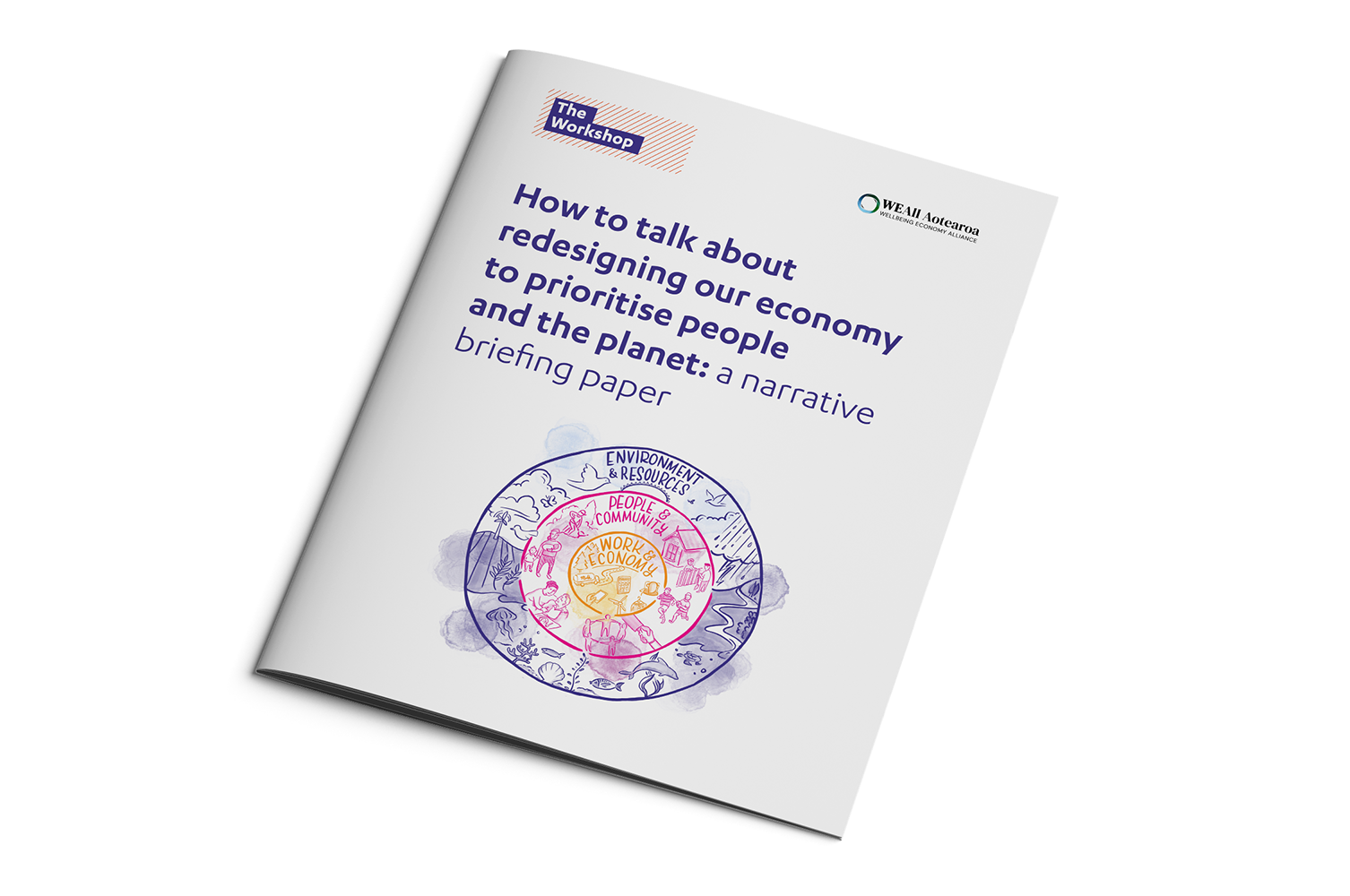
We are pleased to publish this briefing paper prepared by The Workshop.
How we talk about the economy shapes our understanding and can support actions that prioritise people and the planet.
Embrace these narrative frames
The economy is a product of design and can be redesigned — a better systems narrative.
Economic progress means delivering a good life for everyone — a public good narrative.
The economy should be built to work for nature and to meet everyone’s need to live a meaningful and fulfilling life — a prioritising people and planet over profit narrative.
Our democracy is stronger and our economy is built on a stronger foundation when there’s space for everyone to take part in meaningful ways — a better together/public good narrative.
Government, people in business, and communities can act together to design an economy with the things we truly value at its centre — a better together/public good narrative.
Planning for the big stuff by placing nature and community at the centre of our economy is the way to make sure that future generations can live the good lives they deserve — an intergenerational wellbeing narrative.
Embrace these values frames
Reframe economic success as opening pathways for everyone to live meaningful lives in a healthy, sustaining environment.
Talk about care, connection, and contribution enabled by an economy in which we depend on each other and the planet we live on and wealth creation is a collective project with collective goals.
Reclaim freedom from the free market to show how a good economy supports people to choose the lives they really want to live.
Frame the economy through responsible management and care and stewardship values as a way of focusing people’s attention on the generations to come.
Redefine need as tied to the values of social and ecological wellbeing — everyone’s true needs for nature, community, and wellbeing.
Emphasise our equal worth and human dignity as people who are cared for, care, and contribute in different ways.
Embrace these simple explanations and metaphors to deepen understanding
The economy is designed and can be redesigned (or reshaped, reprogrammed or rebuilt).
The economy that people have designed creates social and environmental harm as a consequence of its design — change is possible to build a more democratic and sustainable economy.
Talk about laying down economic tracks or going on a journey to explain how the economy can move us towards a better life together.
Use the metaphor of the economy as our life support system to explain that the economy includes natural resources and unpaid labour and that a healthy environment is the basis of economic success.
Talk about how a wellbeing economy is grounded in place.
People in the government have a responsibility for economic change that works for people and for nature — name what people in the government should be doing and how this would help.
Use the metaphor of an infrastructure of care, connection, and contribution.
Embrace these words and phrases
Redesigning, reprogramming, (re)building the economy.
The environment as our life support system.
Laying tracks (towards a better economy).
Metaphors related to design or construction (but not ‘renovation’).
(Economy as a) network.
Growing/building on.
People’s true needs.
Caring for nature and for people.
Embrace a values and vision-led story structure
Vision
Describe the better world — what is it that we want from the economy?
“We can live in a society where everyone’s contributions are recognised and where what we really value comes first. We can design the economy to prioritise care for people and the planet.”
Values
Tell people why this issue matters to them in terms of our shared intrinsic values.
“A good economy is one that’s good for people and the environment we rely on. It supports everyone to lead a meaningful, fulfilling life.”
Barrier
Name the barrier to that — what is getting in the way?
“Until now, people have designed our economy to prioritise profit and growth over people and the planet.”
Explain
Provide a simple explanation — why is the barrier there, who put it there, what is the impact and what needs to be done?
“Prioritising economic growth over everything else reflects decades of political choices by people in government who believed that free markets were the path to success. Rather than creating freedom, these decisions limit people’s options, create inequality, and pull us away from the things that matter, like caring for our communities and the world we live in.”
Solution
Give people a solution and provide an action they can take.
“Empowering people in our government to put the wellbeing of people and the planet at the heart of our economy will help us lay tracks towards a better life for everyone. We can show our support by asking our government to write sustainability and social justice goals into legislation as a core feature of the economy we design.”