
We are empowering place-based solutions
We know that positive change is already happening in pockets all over Aotearoa. We see real opportunities to work with and amplify what is already happening at a local level. Through advocating for Community Wealth Building and working with local government we seek to support places to implement wellbeing economy initiatives, scale what they are already doing, and connect with others across the country.
Community Wealth Building
Community Wealth Building is an economic development approach that puts people back at the centre of local economies. It ensures wealth generated in a local economy is held and invested back into that area, and puts control and benefits into the hands of local people. It has been highly successful overseas in areas like Preston and Cleveland.
Across Aotearoa, iwi, councils, the Crown and economic development agencies have been looking for new approaches. Community Wealth Building responds to the unique needs of local areas while contributing to a more sustainable, resilient and prosperous economic system overall.
By keeping wealth circulating locally, it helps prevent economic leakage and generates greater prosperity for current and future generations.
In 2025 we launched a white paper, Community Wealth Building: An equitable approach to economic development for Aotearoa New Zealand,
co-created with The Urban Advisory.
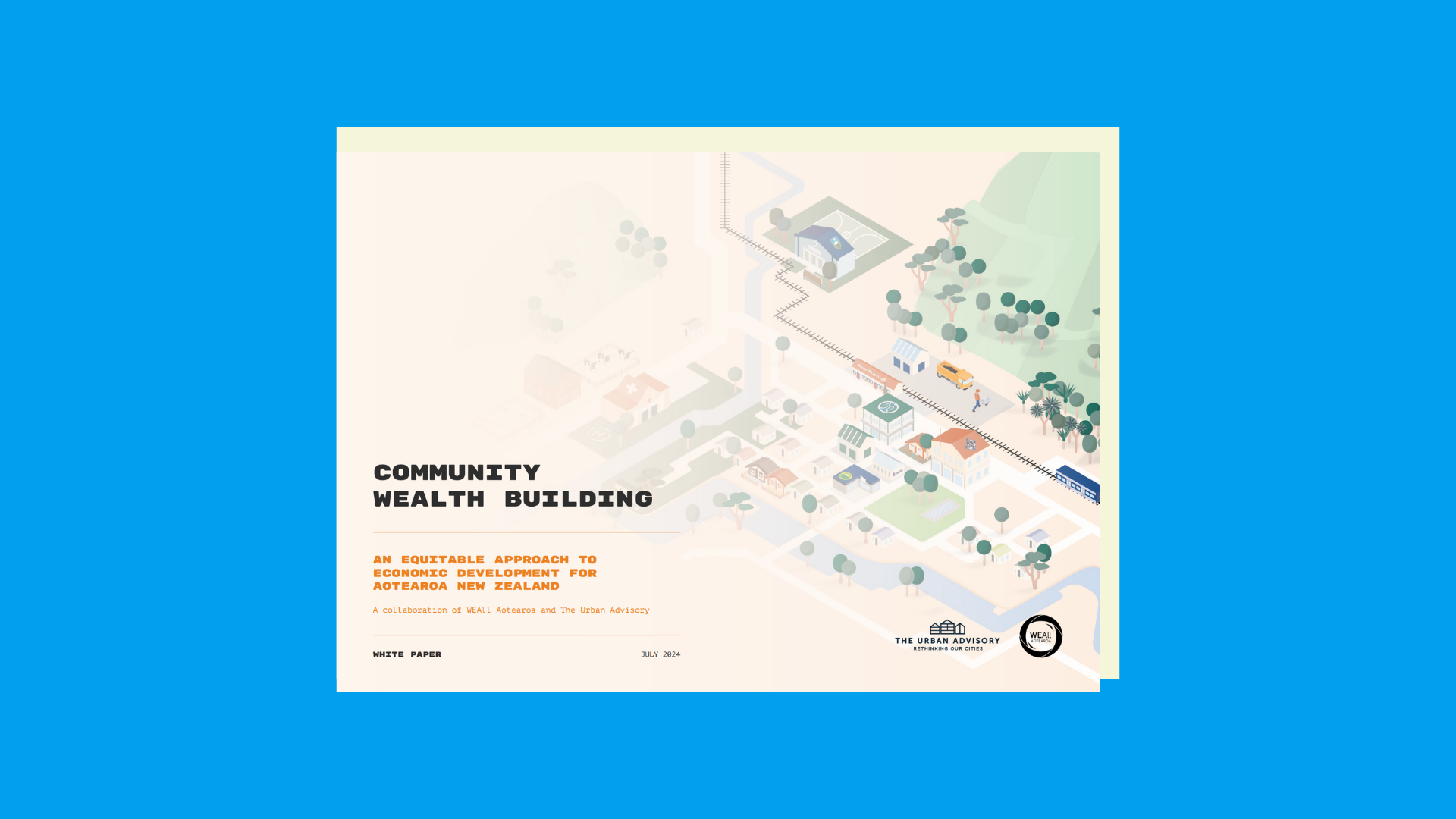
This introductory guide provides cities, regions, individuals, and organisations with practical strategies to work together to apply the principles of Community Wealth Building.
The work of Local Government is essential for the public good.
More than just roads, rates, rats and rubbish - local government is a key part of the local economy, enabling local wellbeing. Local government can drive wellbeing economies and benefit local people.
Our Policy for the Public Good guide shares 100 common-sense, evidence-based policies for local councils, along with 80 real-world case studies.
It is a call to reimagine local governance as a driver of resilience and wellbeing across Aotearoa.

Place-based initiatives
-

The Porirua Wealth Pool
Created by Te Hiko in Cannons Creek, Porirua, a group of people who live or work in this community came together to save their money collectively. The group experiences the power of having savings for emergencies, but also allows people to lend to each other within the community.
-

The Southern Initiative (TSI)
in South Tamaki Makaurau works to champion and enable social innovation to deliver real socio-economic transformation. TSI acts as Anchor Institution supporting entities such as Amotai (connecting Māori and Pasifika-owned businesses with buyers), Uptempo (Pasifika-led fair employment workforce organisation) and Papatoetoe Food Hub (community-led circular enterprise).
-

Otama Marere Trust
manages 45-hectares of land in the Bay of Plenty, communally owned by 632 people. The trust provides education and grants to the owners, organic farming and orchards spur economic development, and the fragile wetland ecosystems are protected through responsible use.
-

Community ownership of Yackandandah’s only petrol company
When the only petrol station was announced it was going to shut in 2002, seven locals established the Yackandandah Community Development Company which then built and began operating as a petrol station in 2003. They have now expanded and are running a rural supplies hardware business and a local newspaper.
-

The UK Preston Model
a collaboration between the Preston City Council and The Centre for Local Economic Strategies (CLES), reformed the city’s public procurement processes by harnessing the potential of public institutions to spend their money locally and socially.
-

The US Cleveland Model
a collaboration between the Cleveland Foundation, the Ohio Employee Ownership Centre, the City of Cleveland, major hospitals and universities in the city, and the Democracy Collaborative, delivered a model of large scale worker-owned and community-benefiting businesses, creating green jobs and driving economic stability in nearby low-wealth communities.
The 5 Pillars of CWB

Harnessing Spending and Local Supply Chains

Prioritising Fair Employment

Investing Locally

Diversifying Ownership Models

Making Land and Assets Work for Locals and the Environment
Join our local government networks
We convene two local government networks: one for elected officials and one for local government staff.
Grown out of the design process for the Policy Guide, we host two communities of practice for local government:
Local Government Elected Representatives Network
Local Government Staff Network
Each Network is a community of practice for those developing and championing wellbeing economy policies to connect, support, and learn from each other and experts on common topics such as Community Wealth Building, Social Procurement, or Failure Demand.