
Deficit by Emma Holten - notes from our book club
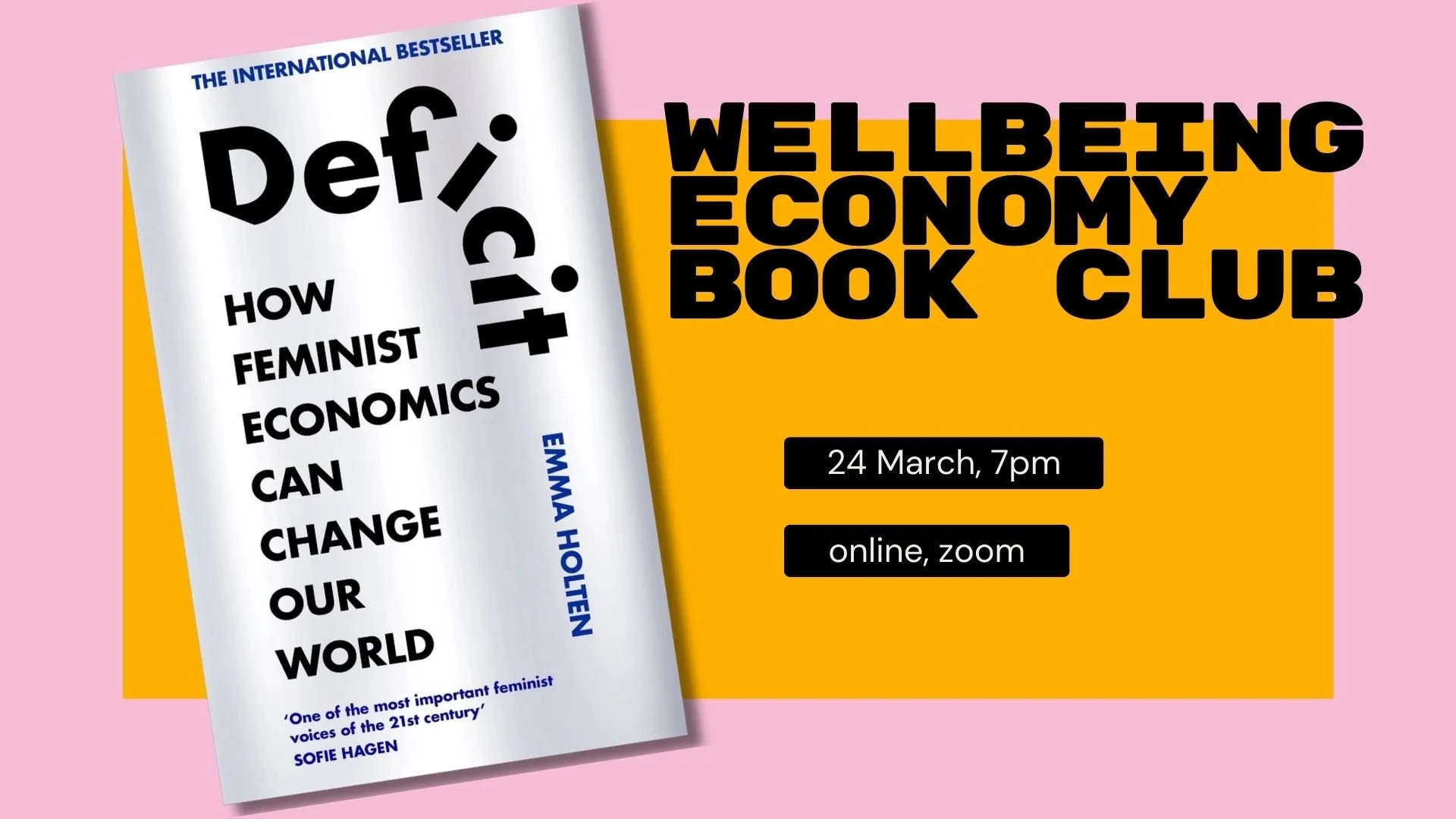
A huge thanks to Emma Holten who joined our Wellbeing Economy Book Club for the discussion of her book Deficit: The Hidden Value of Care.
An introduction to the book
Previously titled Deficit: How Feminist Economics Can Change Our World, was prompted by Emma’s personal experience of needing lifesaving health care that led her to inquire: ‘why with all this incredible wealth as a country (Denmark) can we not translate that into people feeling better?’
In the book she explores how care work became economically invisible and why that matters for policy and society. She covers:
How economics came to exclude care and why GDP fails to capture it,
The history of economic thought and how ‘value’ was narrowed to market production,
The gendered dimensions of care and why women’s work has been systematically undervalued,
The consequences of this blind spot for public policy, including austerity and underinvestment in health, welfare, and communities,
How care actually underpins all economic activity despite being treated as a “cost”, and
Critiques of dominant economic models and metrics.
The book builds the case that recognising and investing in care is not just a social good, but essential to a functioning and resilient economy.
Some insights from our discussion
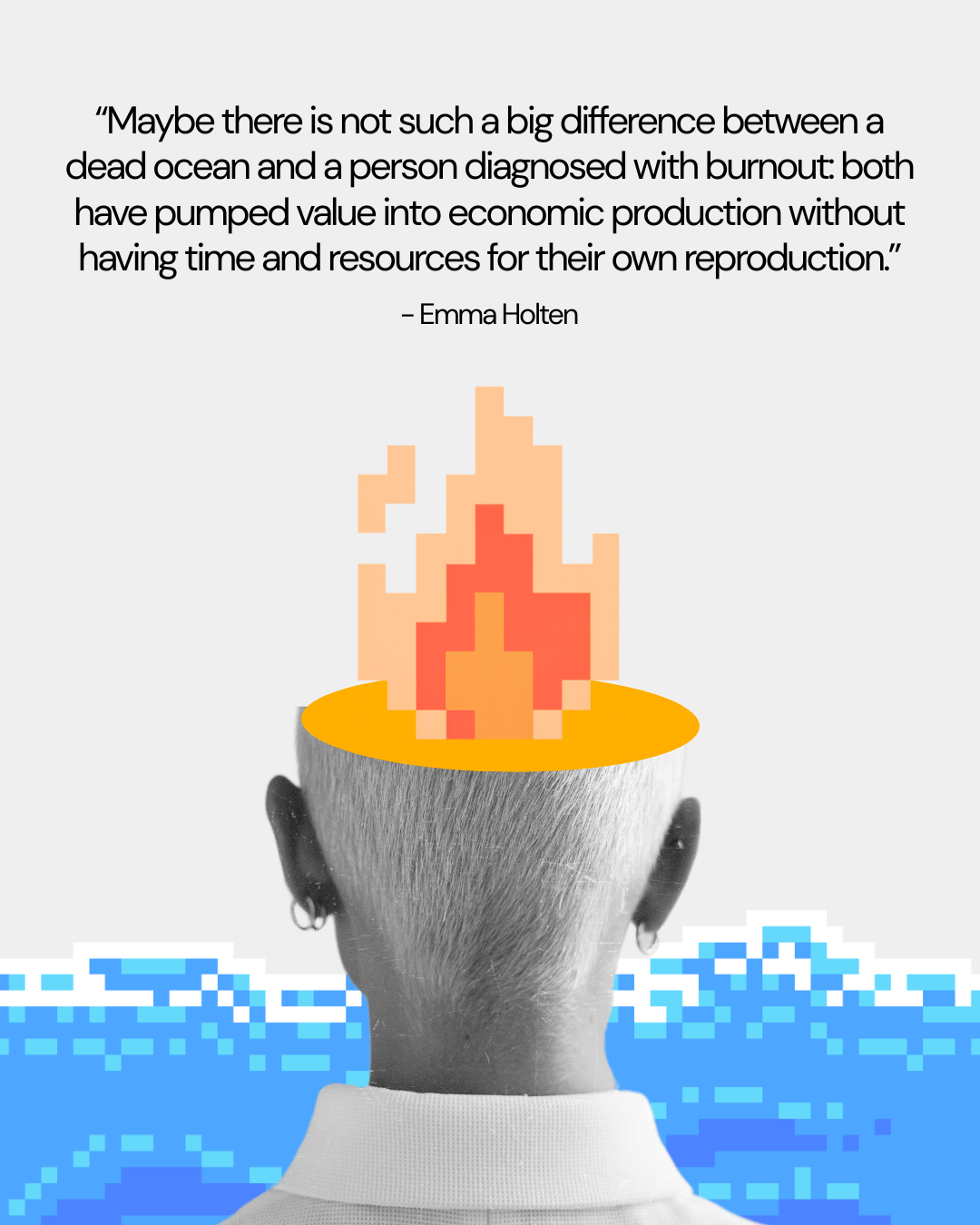
Capitalism constantly demands care to function but actively destroys the thing it needs the most, we are in a care crisis - not setting aside enough resources to meet all our needs.
GDP largely doesn’t include care, while care work - raising of families, supporting friends - makes all other work possible as it creates labour power. Increased consumption is good for GDP but we’re experiencing a loss of social relationships, loss of time with family and friends. Consumption doesn’t always create real value.
Care and nature are fellow sufferers in the current economy.
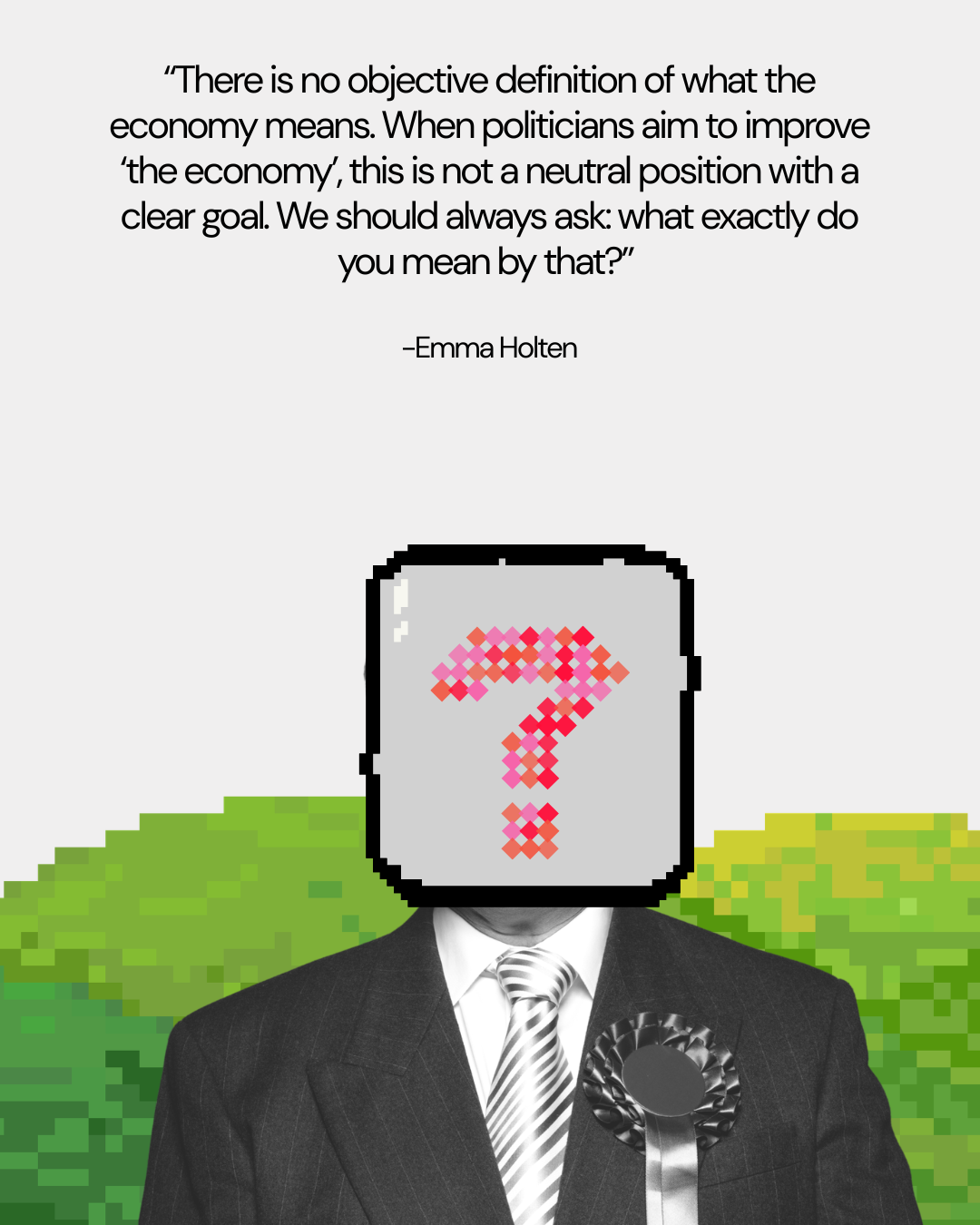
We have created a political environment where the less money we spend on schools, social work, hospital, and the less leisure time we have, the better our economy is doing.
We only evaluate policy from an economic lens - why? What if economists were alongside feminist economists, psychologists, and ecologists in the political system and supporting policy evaluation? Not to mention more democratic involvement of everyday people whose understanding of the importance of care is innate.
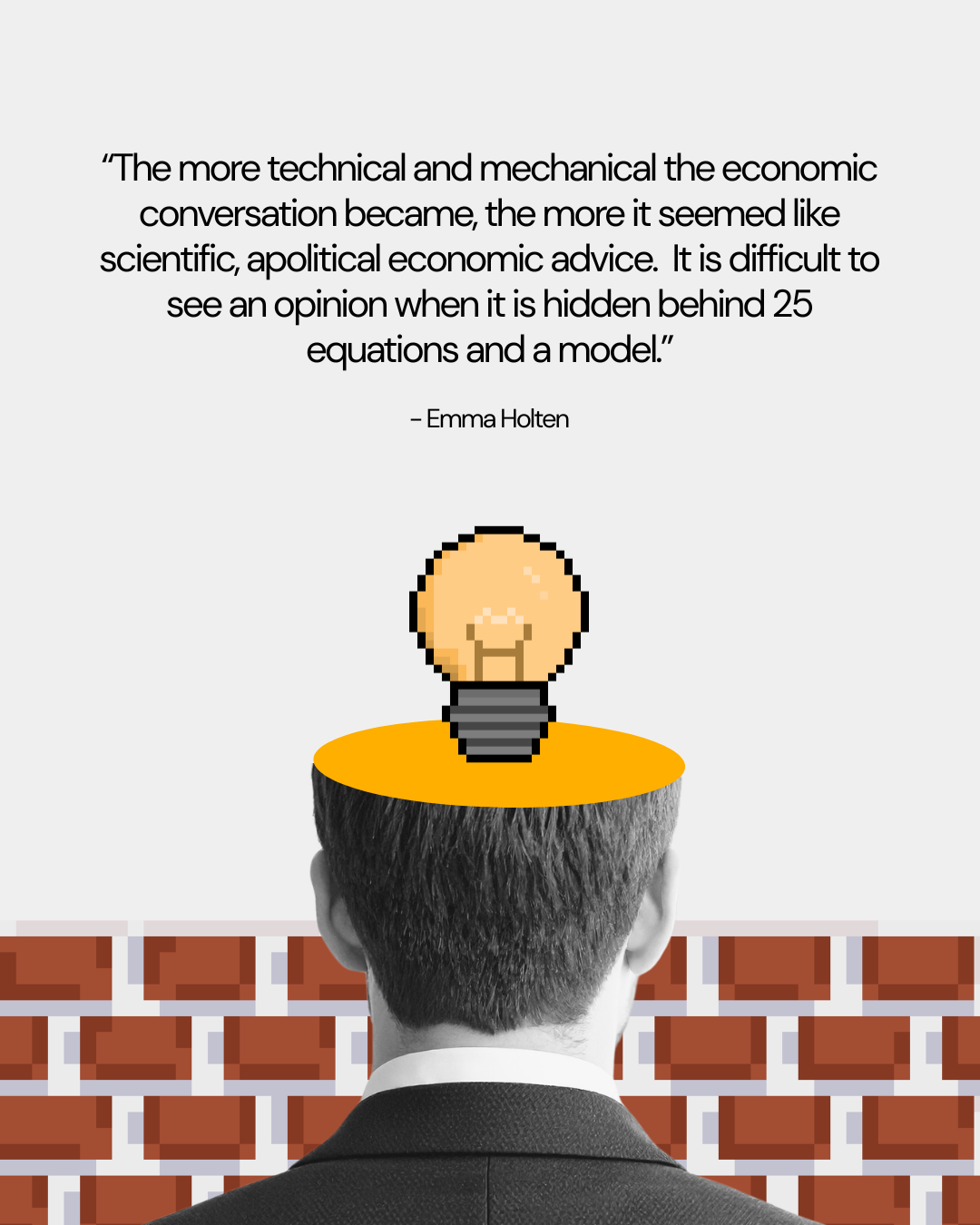
Hidden away in government excel spreadsheets, that are assumed apolitical, are the calculations and models that control big decisions and see care as something that doesn’t create value.
We have outsourced the question of ‘what is a good life?’ to bureaucracy and removed it from the democratic sphere. What does this ‘good life’ really entail? Who defines it?
There is cognitive dissonance between how everyday people understand wealth compared to how economists understand wealth. Economists use price to describe value; $100 on a dress and $100 on a psychologist is treated as the same value. Everyday people know that not to be true from our lived experience of value.
What is value creation? An entrepreneur of a new product or a nurturer of human life?
